In short
Your Western horoscope says Leo; a Vedic astrologer says Cancer. Neither is wrong - the two systems start the zodiac from points that have drifted about 24° apart. What the sidereal and tropical zodiacs are, the 2026 sign dates side by side, and everything else that separates Jyotish from Western astrology.
If you have ever had your chart read by a Vedic astrologer after years of reading Western horoscopes, you have probably met the moment of confusion: you have always been a Leo, and now you are told you are a Cancer. Nothing about your birth has changed. Western and Vedic astrology simply measure the zodiac from different starting points. Western astrology ties 0° Aries to the March equinox and so follows the seasons; Vedic astrology, or Jyotish, ties it to the fixed stars. Because Earth's axis slowly wobbles, those two starting points have drifted about 24° apart - most of a sign. This guide explains the drift in plain terms, sets the 2026 sign dates side by side, and covers what else genuinely differs between the two traditions, from Moon signs and Nakshatras to the Dasha timing system that Western astrology has no equivalent for.
The Short Answer: Two Zodiacs, About 24° Apart
Both systems divide the ecliptic - the Sun's apparent path through the sky - into twelve signs of 30°. The difference is where the count begins. The tropical zodiac used in Western astrology starts at the point where the Sun crosses the celestial equator in March, so Aries always begins on the March equinox. The sidereal zodiac used in Vedic astrology starts from a fixed point among the stars, so Mesha (Aries) always begins in the same place against the constellations.
The gap between the two is called the ayanamsa. Using the Lahiri (Chitrapaksha) ayanamsa - the standard adopted by the Government of India's calendar reform and used by most Indian Panchangs - it is about 24°13′ in 2026 and grows by roughly 50 arc-seconds a year, or one degree every 72 years.
- Tropical (Western)signs fixed to the seasons; 0° Aries = March equinox
- Sidereal (Vedic)signs fixed to the stars; 0° Mesha set by the star Spica (Chitra) at 0° Libra
- Ayanamsa in 2026about 24°13′ (Lahiri)
- Practical effectmost planets, including your Sun and Moon, fall one sign earlier in a Vedic chart
Why the Zodiacs Drifted Apart: Precession of the Equinoxes
Earth spins like a slightly tilted top, and its axis traces a slow circle in space roughly every 25,800 years. As it does, the March equinox point slides backwards along the zodiac against the background stars - the precession of the equinoxes, first measured by the Greek astronomer Hipparchus in the second century BCE.
Around the third century CE - about 285 CE in the Lahiri reckoning - the equinox point and the start of sidereal Aries roughly coincided, and the two zodiacs agreed. Western astrology kept its signs anchored to the equinox as it moved; Indian astronomy kept its signs anchored to the stars. Seventeen centuries of precession later, the two are about 24° apart and still separating.
The Western zodiac tells you where the Sun stood in the seasons. The Vedic zodiac tells you where it stood among the stars. Both are measurements - of different things.
Vedic and Western Sun Sign Dates Compared (2026)
The Sun enters each sidereal sign on its Sankranti - Makar Sankranti in January is the best known. Here are the 2026 dates side by side. Dates can move by a day from year to year and with your time zone, so if you were born on a changeover date, use the calculator linked below this article to check your exact sign.
- Mesha (Aries)Vedic April 14 - May 14 · Western March 20 - April 19
- Vrishabha (Taurus)Vedic May 15 - June 14 · Western April 20 - May 20
- Mithuna (Gemini)Vedic June 15 - July 16 · Western May 21 - June 20
- Karka (Cancer)Vedic July 17 - August 16 · Western June 21 - July 22
- Simha (Leo)Vedic August 17 - September 16 · Western July 23 - August 22
- Kanya (Virgo)Vedic September 17 - October 16 · Western August 23 - September 22
- Tula (Libra)Vedic October 17 - November 15 · Western September 23 - October 22
- Vrishchika (Scorpio)Vedic November 16 - December 15 · Western October 23 - November 21
- Dhanu (Sagittarius)Vedic December 16 - January 13 · Western November 22 - December 21
- Makara (Capricorn)Vedic January 14 - February 12 · Western December 22 - January 19
- Kumbha (Aquarius)Vedic February 13 - March 14 · Western January 20 - February 17
- Meena (Pisces)Vedic March 15 - April 13 · Western February 18 - March 19
Your Moon Sign and Ascendant Matter More Than Your Sun Sign
The bigger difference is not which zodiac is used but what is read from it. Western popular astrology is built around the Sun sign. Jyotish is built around the Lagna (Ascendant) and the Moon sign (Rashi). The Lagna sets the twelve houses and therefore which areas of life each planet governs for you; the Moon sign describes the mind and emotions, and Indian horoscopes, Sade Sati and most transit readings are counted from it.
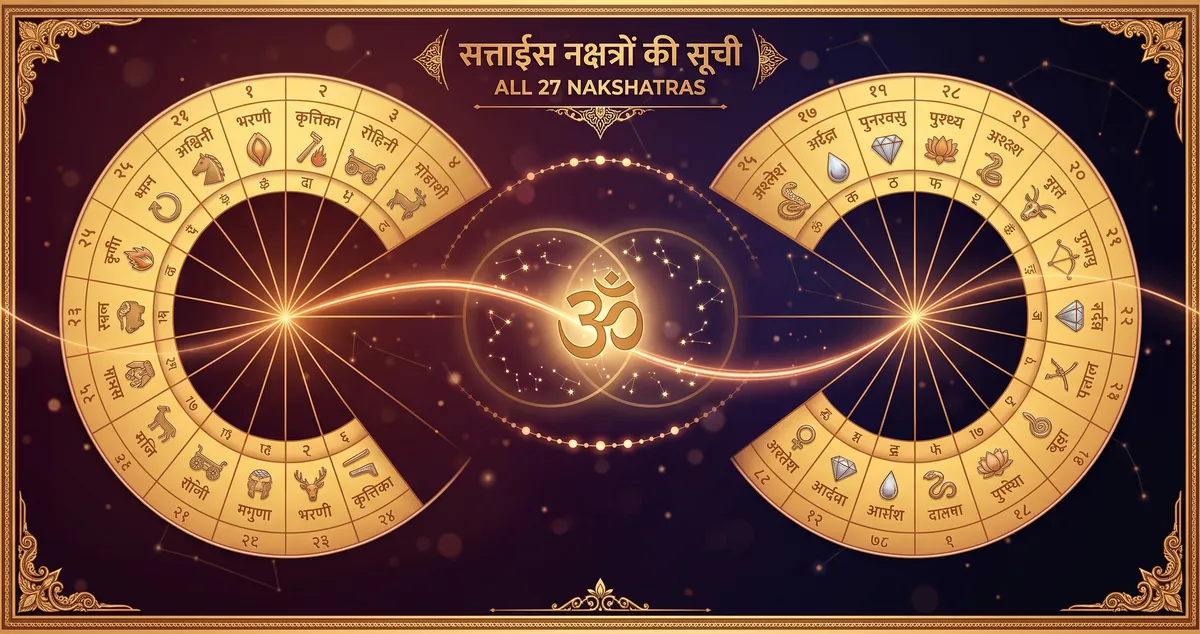
The Moon also gives Vedic astrology its finest layer of detail: the 27 Nakshatras, lunar mansions of 13°20′ each. Your birth Nakshatra describes temperament, supplies the traditional first syllable of your name, drives several factors in Kundali matching, and sets the starting point of your Dasha timeline.
Timing: The Vimshottari Dasha System
Western astrology times events mainly through transits and progressions. Vedic astrology adds the Vimshottari Dasha, a 120-year sequence of planetary periods - Ketu, Venus, Sun, Moon, Mars, Rahu, Jupiter, Saturn and Mercury - that begins from the lord of your birth Nakshatra. Each Mahadasha is divided into Antardashas, so at any moment two or three planets are 'running' your life and colouring how transits land.
This is why a Vedic reading can say not only what a chart promises but roughly when: a strong 10th-house promise matures in the Dasha of the planet connected to it. It is the single most distinctive tool Jyotish offers, and it depends on an accurate birth time.
Other Real Differences Between Jyotish and Western Astrology
Beyond the zodiac and Dashas, the traditions differ in how charts are built and what is done with them. None of these makes one system 'correct' - they are different toolkits built for different questions.
- PlanetsJyotish uses nine grahas - Sun, Moon, Mars, Mercury, Jupiter, Venus, Saturn, Rahu and Ketu (the lunar nodes); Uranus, Neptune and Pluto are traditionally not used
- Housesmost Vedic astrologers use whole-sign houses, where each sign is one house counted from the Lagna
- Divisional chartsthe Navamsha (D9) for marriage and inner strength, the Dashamsha (D10) for career, and others for specific life areas
- Aspectsplanets aspect whole signs, with special aspects for Mars, Jupiter and Saturn
- PurposeJyotish is strongly predictive and remedial - mantra, charity, fasting and, when warranted, gemstones - while modern Western astrology is often more psychological
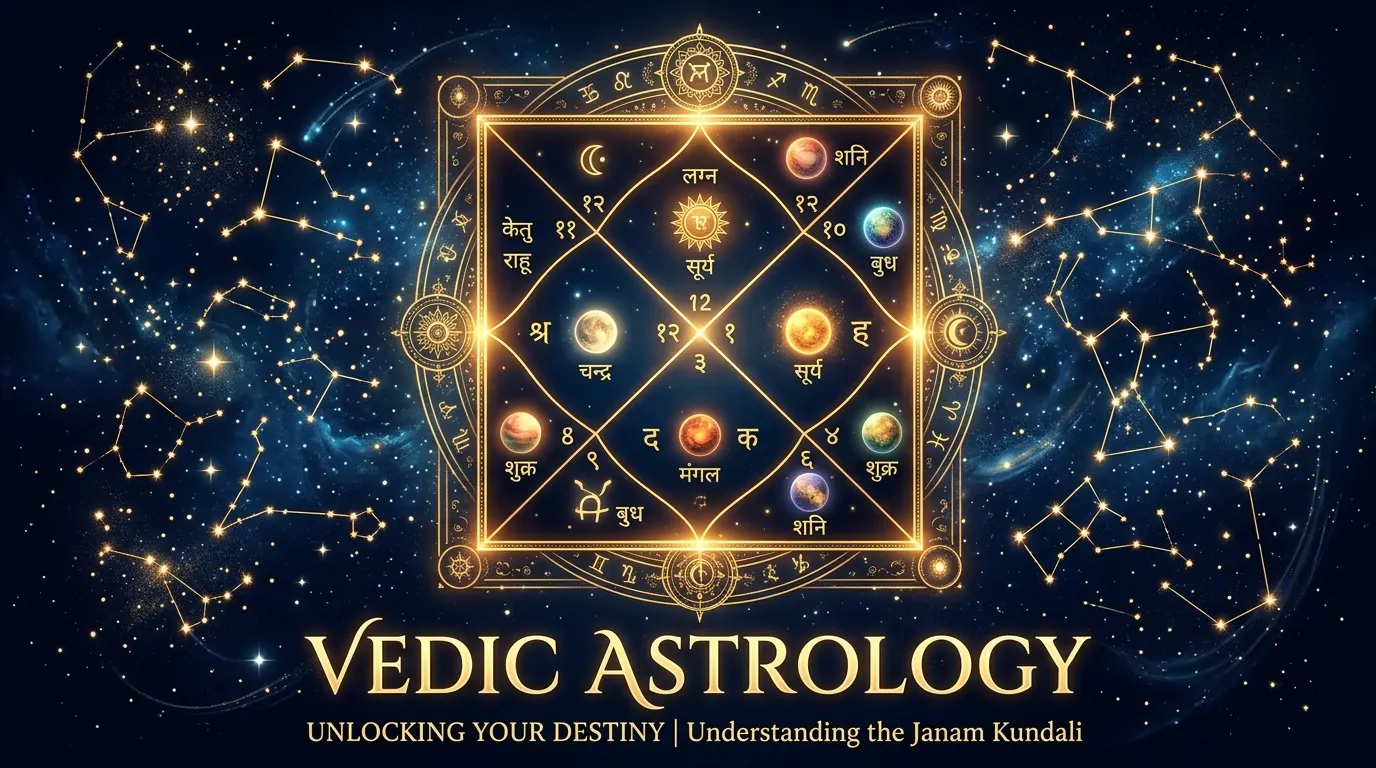
- Chart shapeNorth Indian charts are diamond-shaped and South Indian charts square; Western charts are circular wheels
Which System Should You Use?
If you enjoy Western astrology for self-reflection, there is no need to abandon it - it describes the Sun's place in the seasons consistently. But if you want predictive timing, Kundali matching for marriage, muhurat for important events, or remedies for a difficult period, those methods were built on the sidereal zodiac and only work with a sidereal chart.
The simplest first step is to see your own sidereal placements. The free calculator linked below this article gives your Vedic Moon sign, Nakshatra and Sun sign from your birth date, time and birth time zone, and handles births anywhere in the world. A full reading then adds the Ascendant, houses, divisional charts and your current Dasha.
The takeaway
Your sign did not change - the measuring stick did. Western astrology measures the zodiac from the March equinox, Vedic astrology from the stars, and precession has pushed the two about 24° apart, which moves most placements back one sign. Beyond that shift, Jyotish reads the chart differently: it leads with the Ascendant and Moon, adds the 27 Nakshatras, and times life through the Vimshottari Dasha. Check your sidereal placements with the calculator, and if you would like to see what your Vedic chart says about the years ahead, a consultation is available online from anywhere in the world.