In short
Maha Navami 2026, Navratri Day 9, is Monday, October 19 in India, the USA, Canada and the UK. Navami tithi runs from 10:52 AM IST on October 19 to 12:51 PM IST on October 20, so the havan fits the afternoon of the 19th or the morning of the 20th, and the Navratri fast is broken after 12:51 PM IST on October 20. The goddess is Maa Siddhidatri, the colour is peacock green, the bhog is sesame and her graha is Ketu. Bengal's Durga Puja keeps Maha Navami on October 20, and havan and parana times for 10 time zones are below.
Navratri Day 9, Maha Navami, is dedicated to Maa Siddhidatri, the goddess who grants the eight siddhis and who gave Shiva half of her own form to make him Ardhanarishvara. In India Navami tithi runs from 10:52 AM IST on Monday, October 19 to 12:51 PM IST on Tuesday, October 20. Most Indian calendars list Maha Navami on October 19, the same day as Ashtami; the Navami havan can be performed after 10:52 AM that day or on the morning of October 20, and the Navratri fast is broken after Navami ends at 12:51 PM on October 20. Wear peacock green, offer sesame (til) as bhog, and chant 'Om Devi Siddhidatryai Namah'. In Jyotish she governs Ketu, the graha of liberation. Dussehra follows on Tuesday, October 20 in India, the USA, Canada and the UK - but in Australia and New Zealand Vijayadashami is Wednesday, October 21.
Maha Navami 2026 Date: October 19 or 20? Navami Time by Country
Navami follows a doubled Saptami in India, so Ashtami and the start of Navami share Monday, October 19. Abroad the sequence shifts with each country's sunrise.
| Place | Maha Navami | Navami tithi (local time) | Dussehra |
|---|---|---|---|
| India and UAE | Monday, October 19 | 10:52 AM Oct 19 to 12:51 PM Oct 20 IST (Dubai 9:22 AM Oct 19 to 11:21 AM Oct 20) | Tuesday, October 20 |
| Bengal - Durga Puja | Tuesday, October 20 (Navami Homa) | 10:52 AM Oct 19 to 12:51 PM Oct 20 IST | Bijoya Dashami Wednesday, October 21 |
| USA East and Canada (EDT) | Monday, October 19 | 1:22 AM Oct 19 to 3:21 AM Oct 20 | Tuesday, October 20 |
| USA Central (CDT) | Monday, October 19 | 12:22 AM Oct 19 to 2:21 AM Oct 20 | Tuesday, October 20 |
| USA West and Vancouver (PDT) | Monday, October 19 | 10:22 PM Oct 18 to 12:21 AM Oct 20 | Tuesday, October 20 |
| UK and Europe (BST) | Monday, October 19 | 6:22 AM Oct 19 to 8:21 AM Oct 20 | Tuesday, October 20 |
| Singapore | Navami begins the afternoon of Monday, October 19 and is present at sunrise on Tuesday, October 20 | 1:22 PM Oct 19 to 3:21 PM Oct 20 | Borderline - October 20 by the first-day rule, October 21 for the full Vijay Muhurat |
| Perth (AWST) | Navami begins the afternoon of Monday, October 19 and is present at sunrise on Tuesday, October 20 | 1:22 PM Oct 19 to 3:21 PM Oct 20 | Borderline - October 20 by the first-day rule, October 21 for the full Vijay Muhurat |
| Sydney and Melbourne (AEDT) | Navami begins the evening of Monday, October 19 and is present at sunrise on Tuesday, October 20 | 4:22 PM Oct 19 to 6:21 PM Oct 20 | Wednesday, October 21 |
| Auckland (NZDT) | Tuesday, October 20 | 6:22 PM Oct 19 to 8:21 PM Oct 20 | Wednesday, October 21 |
When Does Navratri 2026 End?
Navratri 2026 ends with Maha Navami on Monday, October 19, the ninth and last night, and the festival closes the next day with Vijayadashami on Tuesday, October 20. The nine nights run from Ghatasthapana on Sunday, October 11 to the night of October 19. Saptami falls on two days in India this year, so Durga Ashtami and Maha Navami share Monday, October 19, and the last two forms of the Goddess are worshipped on the same date.
In practice Navratri ends in three steps. Navami tithi ends at 12:51 PM IST on October 20, the Navratri fast is broken after that, and the Kalash and the sprouted barley are taken down on Dashami that same afternoon in India. In Australia and New Zealand, where Dashami begins only on the evening of October 20, the closing rites and Dussehra move to Wednesday, October 21.
- Navratri 2026 startsSunday, October 11 (Ghatasthapana)
- Last night of NavratriMonday, October 19 (Maha Navami)
- Navami tithi ends12:51 PM IST, Tuesday, October 20
- Fast broken (parana)after 12:51 PM IST, Tuesday, October 20
- Festival closesVijayadashami, Tuesday, October 20 (Australia and New Zealand: Wednesday, October 21)
Navratri Day 9 2026 at a Glance: Goddess, Colour, Bhog and Nakshatra
Navami completes the nine nights. It is the day of the concluding havan, of Kanya Pujan for families who keep it on Navami, of Ayudha Puja in South India, and of breaking the Navratri fast.
| Item | Detail |
|---|---|
| Date (India) | Monday, October 19, 2026 - Navami tithi 10:52 AM IST Oct 19 to 12:51 PM IST Oct 20 |
| Goddess | Maa Siddhidatri |
| Colour | Peacock green (worn on October 19) |
| Bhog | Sesame seeds (til); for Kanya Pujan, halwa, puri and black chana |
| Flower | White lotus or champa |
| Mantra | Om Devi Siddhidatryai Namah |
| Graha | Ketu |
| Nakshatra (IST) | Uttara Ashadha until 3:38 PM Oct 19, then Shravana until 6:01 PM Oct 20 |
| Moon | In Capricorn |
| Navratri parana (India) | After 12:51 PM IST on Tuesday, October 20 |
| Ayudha Puja (South India) | Tools, vehicles and instruments are worshipped on Navami |
Who Is Maa Siddhidatri?
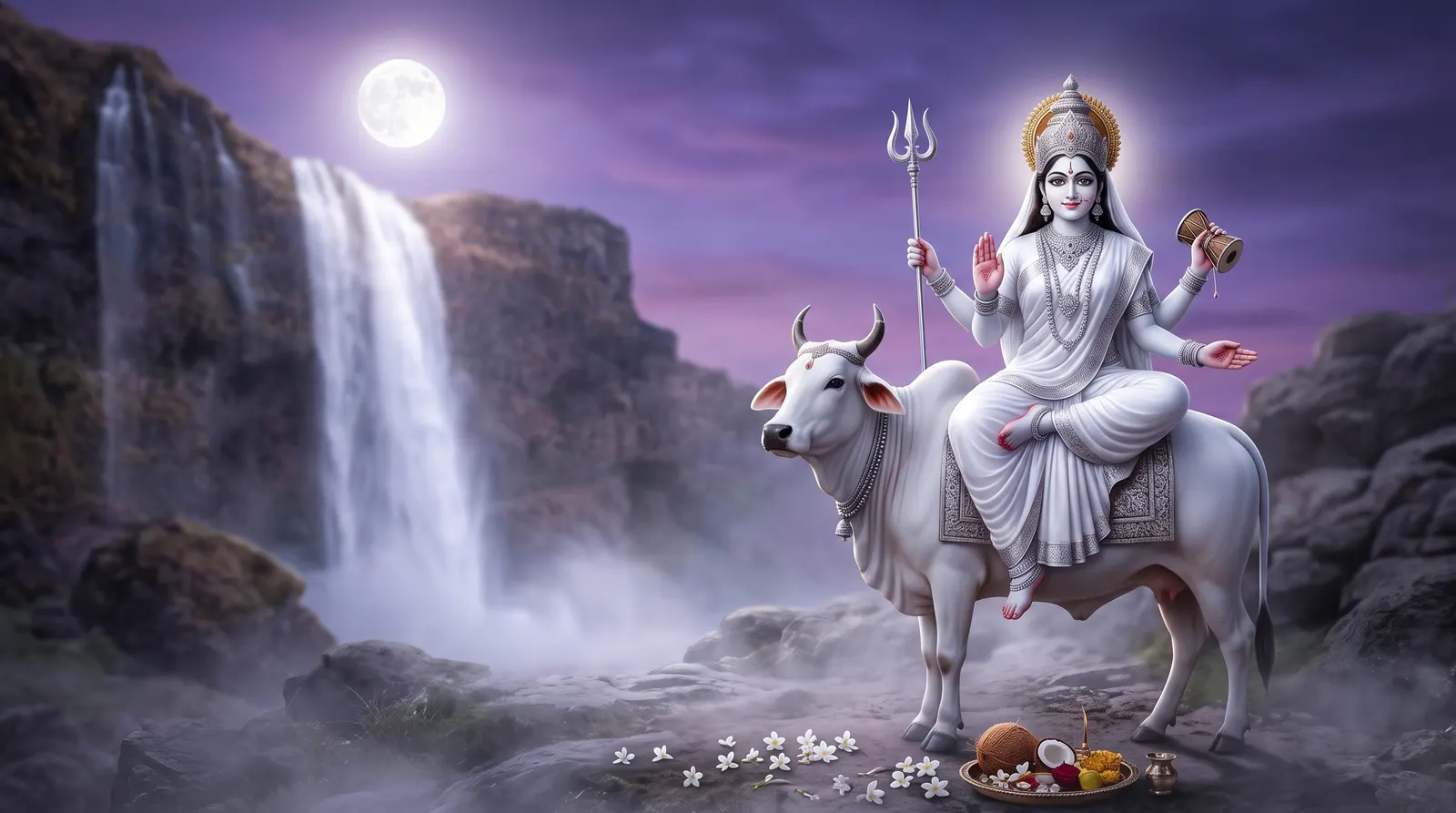
Siddhidatri means the giver of siddhis - perfections or spiritual powers. Before creation, Shiva worshipped the primordial Goddess as Siddhidatri and received from her the eight siddhis; it is said that half of his body became hers, which is how he came to be Ardhanarishvara, half male and half female. She is therefore the completion of the nine-night journey: the Goddess who gives not a particular boon but the capacity behind all boons.
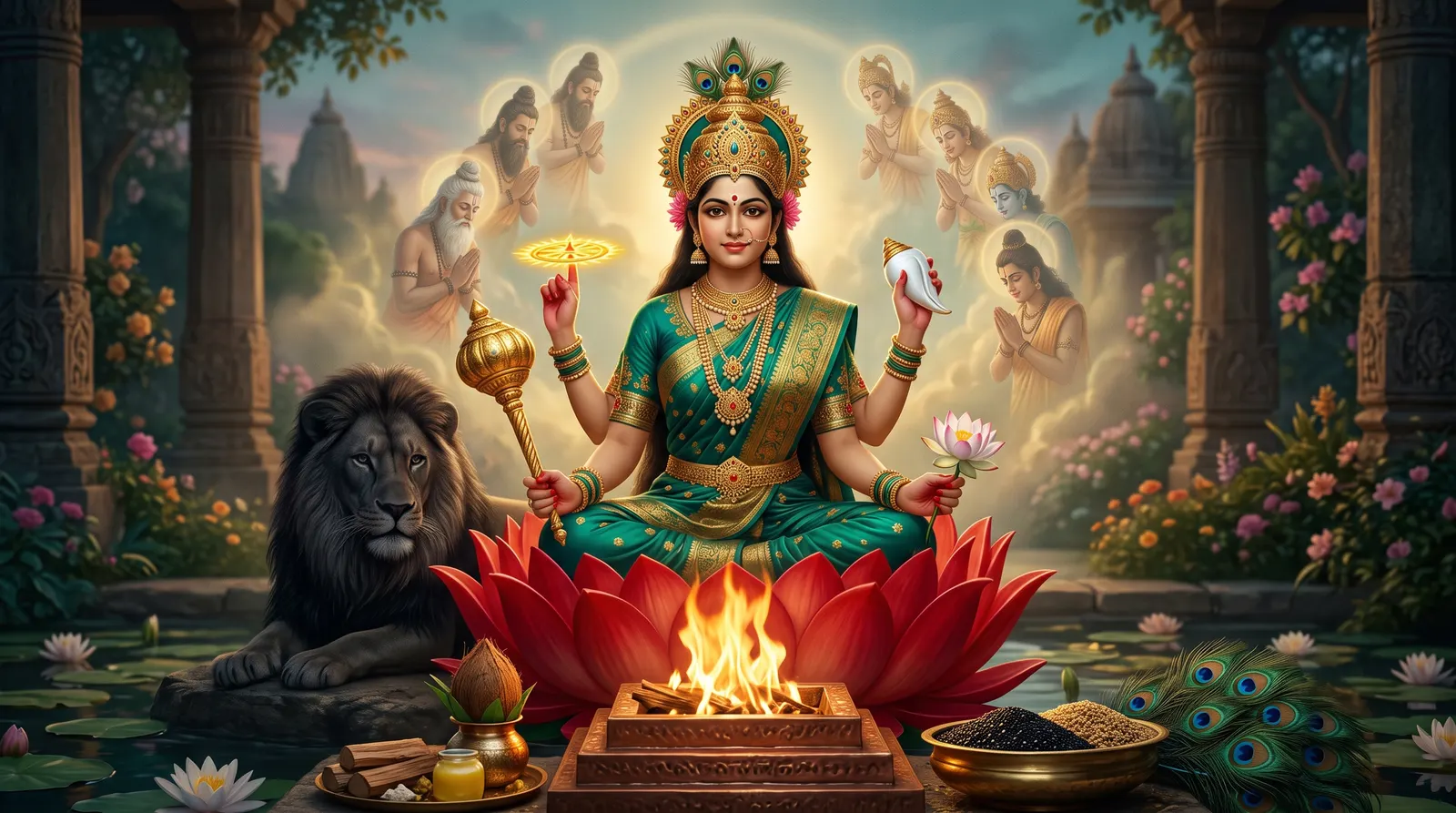
She is seated on a lotus and also rides a lion. Her four hands hold a discus, a conch, a mace and a lotus. Gods, siddhas, gandharvas, yakshas and even asuras worship her. The eight siddhis traditionally listed are Anima (becoming minute), Mahima (becoming vast), Garima (becoming heavy), Laghima (becoming weightless), Prapti (reaching anything), Prakamya (fulfilling any wish), Ishitva (lordship) and Vashitva (control).
Siddha Gandharva Yakshadyairasurairamarairapi, Sevyamana Sada Bhuyat Siddhida Siddhidayini.
Siddhidatri and Ketu: Completion Before the Nodes Move
Ketu, the south lunar node, is the graha of detachment, spiritual insight, past-life skill, sudden endings and moksha. Where Rahu reaches outward and wants more, Ketu lets go. A difficult Ketu shows as confusion about purpose, unexplained losses, isolation or a sense of disconnection. A well-placed Ketu gives intuition, depth and the kind of mastery that comes from long practice. Siddhidatri, the goddess of completion, governs it.
Ketu has been in Leo since May 2025, opposite Rahu in Aquarius, and on December 5, 2026 the axis shifts to Cancer and Capricorn. This is the last Navami of Ketu's Leo cycle. For Leo Moon signs and ascendants, for anyone running a Ketu Mahadasha or Antardasha, and for those whose Ketu sits in the 1st, 4th, 7th or 10th house, the Navami havan this year doubles as the most fitting Ketu remedy of the cycle.
There is one more astrological detail worth knowing. On Vijayadashami, October 20, the Moon is in Shravana nakshatra in India until 6:01 PM IST. Dashami joined with Shravana is classically singled out as the most auspicious form of Vijayadashami, and in 2026 the combination holds through the Vijay Muhurat across India.
- Ketu nowin Leo until December 5, 2026, then Cancer
- Most relevant chartsKetu Dasha, Leo Moon or ascendant, Ketu in an angle
- Ketu beej mantra'Om Shraam Shreem Shraum Sah Ketave Namah', 108 times
- Simple remedyGanesha worship alongside the havan, and a donation of a multicoloured blanket or sesame
- Dussehra 2026 in IndiaDashami with Shravana nakshatra - the classically preferred combination
Navami Havan Muhurat and Navratri Parana Time 2026 by City
The Navratri havan is the concluding fire offering, performed on Navami while the tithi runs; some families perform it on Ashtami instead. In India Navami is available from 10:52 AM IST on October 19 until 12:51 PM IST on October 20, so either the afternoon of the 19th or the morning of the 20th is correct.
Parana, the breaking of the Navratri fast, is done after Navami tithi ends, on Dashami. In India that means after 12:51 PM IST on October 20. Families whose custom is to break the fast on Navami after the havan and Kanya Pujan may do so; the tradition accepts both.
| Place | Navami havan | Navratri parana |
|---|---|---|
| India | After 10:52 AM IST on Oct 19, or on Oct 20 from sunrise (6:24 AM Delhi, 6:34 AM Mumbai) until 12:51 PM | After 12:51 PM IST on Tuesday, October 20 |
| Dubai and the Gulf | After 9:22 AM on Oct 19, or the morning of Oct 20 before 11:21 AM | After 11:21 AM on Tuesday, October 20 |
| New York, New Jersey and Toronto | Monday, October 19 (Navami runs all day) | Tuesday, October 20 morning (Navami ends 3:21 AM EDT) |
| Chicago, Houston and Dallas | Monday, October 19 (Navami runs all day) | Tuesday, October 20 morning (Navami ends 2:21 AM CDT) |
| California and Vancouver | Monday, October 19 (Navami runs all day) | Tuesday, October 20 morning (Navami ends 12:21 AM PDT) |
| London and Leicester | Monday, October 19, or early on October 20 before 8:21 AM | After 8:21 AM BST on Tuesday, October 20 |
| Singapore and Perth | After 1:22 PM on Oct 19, or Oct 20 before 3:21 PM | After 3:21 PM on Tuesday, October 20 |
| Sydney and Melbourne | Tuesday, October 20, from sunrise (6:08 AM Sydney, 6:28 AM Melbourne) until 6:21 PM | After 6:21 PM AEDT on Tuesday, October 20, or on Dussehra morning, October 21 |
| Auckland | Tuesday, October 20, before 8:21 PM | Wednesday, October 21 (Navami ends 8:21 PM NZDT on October 20) |
Navami Havan Vidhi and Samagri List
The Navami havan is the concluding fire offering of Navratri, and the household form needs about an hour. Perform it after the Siddhidatri puja and before Kanya Pujan, while Navami tithi is running in your city. Sit facing east or north, keep the havan kund on a raised base, and let the senior member of the family make the sankalpa naming the date, the place and the purpose.
- Samagria havan kund, dry mango wood, cow ghee, ready havan samagri, black sesame, barley, rice, jaggery or sugar, camphor, cloves, a whole dry coconut, red cloth and moli
- Sankalpatake water, akshat and a flower in the right hand and state the date, place and purpose of the havan
- Ganesha and Navagrahabegin with ahutis to Ganesha and the nine grahas before the Devi ahutis
- Havan mantrathe Navarna mantra - 'Om Aim Hreem Kleem Chamundaye Vichche Swaha' - with 108 ahutis of ghee and havan samagri
- Saptashati ahutisfamilies who read the Durga Saptashati may offer one ahuti at the end of each verse or each chapter
- Purnahutia coconut wrapped in red cloth with moli is offered whole into the fire to complete the havan
- After the fireperform aarti, recite the Kshama Prarthana, and apply a little of the havan ash on the forehead as prasad
After Navami: Dussehra 2026 Date and Vijay Muhurat in Brief
Vijayadashami is kept on the day Dashami prevails in the afternoon, in the Aparahna period that contains the Vijay Muhurat. Dashami begins at 12:51 PM IST on October 20. In India, the Gulf and the Americas it covers that afternoon. In Australia and New Zealand it begins only on the evening of the 20th, so Dussehra moves to Wednesday, October 21.
- New DelhiTuesday, October 20, 1:59 PM to 2:44 PM IST
- Mumbai and AhmedabadTuesday, October 20, 2:19 PM to 3:06 PM IST
- KolkataTuesday, October 20, 1:16 PM to 2:02 PM IST
- DubaiTuesday, October 20, 1:58 PM to 2:44 PM
- New YorkTuesday, October 20, 2:29 PM to 3:13 PM EDT (New Jersey about two minutes later)
- Toronto and BramptonTuesday, October 20, 2:51 PM to 3:34 PM EDT
- ChicagoTuesday, October 20, 2:23 PM to 3:07 PM CDT
- HoustonTuesday, October 20, 2:59 PM to 3:44 PM CDT
- DallasTuesday, October 20, 3:03 PM to 3:48 PM CDT
- San Francisco Bay AreaTuesday, October 20, 2:42 PM to 3:26 PM PDT
- Los AngelesTuesday, October 20, 2:29 PM to 3:13 PM PDT
- VancouverTuesday, October 20, 2:40 PM to 3:22 PM PDT
- LondonTuesday, October 20, 2:28 PM to 3:10 PM BST (Leicester 2:32 PM to 3:13 PM)
- SydneyWednesday, October 21, 2:51 PM to 3:43 PM AEDT
- MelbourneWednesday, October 21, 3:17 PM to 4:10 PM AEDT
- PerthWednesday, October 21, 2:11 PM to 3:03 PM AWST
- AucklandWednesday, October 21, 3:18 PM to 4:11 PM NZDT
How to Break the Navratri Fast: Parana Rules
The tradition records two valid views on Navratri parana. The first allows the fast to be broken on Navami itself, once the havan and Kanya Pujan are complete. The stricter view holds that parana is done only after Navami tithi has ended and Dashami has begun - in India, after 12:51 PM IST on Tuesday, October 20, 2026. Follow your family's custom; what matters is that the order of the closing rites is kept.
Where Navami ends in the middle of the night, as it does across North America this year, parana is done after sunrise the next morning, not at the moment the tithi changes.
- OrderSiddhidatri puja, then the havan, then Kanya Pujan, then the bhog offering, and only then parana
- First foodthe prasad offered to the Goddess - halwa, puri and black chana from Kanya Pujan, or a til laddoo from the Navami bhog
- First mealkeep it light and satvik; return to grains and normal meals gradually through the day
- Do notbreak the fast before the havan is complete, or dismantle the Kalash on Navami - that belongs to Dashami
- Akhand Jyotkeep it burning until the closing puja and let it go out on its own rather than blowing it out
- Abroadin the USA and Canada, break the fast on the morning of Tuesday, October 20; in the UK after 8:21 AM BST; in Sydney after 6:21 PM AEDT on October 20; in Auckland on October 21
Maa Siddhidatri Puja Vidhi and Mantra for Maha Navami
Perform the Siddhidatri puja once Navami has begun, then the havan, then Kanya Pujan if your family keeps it on Navami.
- Preparebathe, wear peacock green, check the Akhand Jyot
- Invokeplace Maa Siddhidatri's picture beside the Kalash and recite her dhyana
- Offerwhite lotus or champa, kumkum, akshat, a red chunari, incense, a ghee lamp
- Bhogsesame seeds, or til laddoo; tradition links this offering to protection from untimely misfortune
- Mool mantraOm Devi Siddhidatryai Namah
- StutiYa Devi Sarvabhuteshu Maa Siddhidatri Rupena Samsthita, Namastasyai Namastasyai Namastasyai Namo Namah
- Readthe final chapters of the Durga Saptashati, followed by the Kshama Prarthana asking forgiveness for errors in the nine days
- Barleythe sprouted barley (Jayanti) is cut on Dashami and given as prasad; place a few blades behind the ear or in your wallet
- Visarjanon Dashami, move the Kalash slightly, sprinkle its water around the home, and immerse or plant the barley respectfully
Siddhidatri Mantra Meaning and How to Chant It
Chant the Siddhidatri mantras 108 times on Maha Navami, facing east or north, on a rudraksha or sphatik mala, after lighting the ghee lamp and before the havan.
- Mool mantra - Om Devi Siddhidatryai Namah'Salutations to the Goddess Siddhidatri, the giver of siddhis.' The short daily mantra, used for the 108 count
- Stuti - Ya Devi Sarvabhuteshu Maa Siddhidatri Rupena Samsthita, Namastasyai Namastasyai Namastasyai Namo Namah'To the Goddess who dwells in all beings in the form of Siddhidatri, salutations to her, again and again.' The Devi Mahatmya refrain adapted to the ninth form
- Dhyana - Siddha Gandharva Yakshadyairasurairamarairapi, Sevyamana Sada Bhuyat Siddhida Siddhidayini'May she who is always served by siddhas, gandharvas, yakshas, asuras and gods, the giver of siddhis, grant siddhi to me.' Recited once while invoking her beside the Kalash
- Navarna mantra - Om Aim Hreem Kleem Chamundaye Vichchethe nine-syllable mantra of the Durga Saptashati; Aim, Hreem and Kleem invoke Mahasaraswati, Mahalakshmi and Mahakali, and it is the mantra used for the Navami havan ahutis
Navratri Day 9 Colour 2026: Peacock Green
The colour for Day 9 is peacock green, worn on Monday, October 19 under the civil-date calendar. It is the colour of fulfilment and abundance - fitting for the goddess who completes the nine nights.
The full 2026 sequence for India: Day 1 Shailaputri (Oct 11), Day 2 Brahmacharini (Oct 12), Day 3 Chandraghanta (Oct 13), Day 4 Kushmanda (Oct 14), Day 5 Skandamata (Oct 15), Day 6 Katyayani (Oct 16), Day 7 Kalaratri (Saptami, Oct 17 and 18), Day 8 Mahagauri (Durga Ashtami, Oct 19), Day 9 Siddhidatri (Maha Navami, Oct 19, with Navami tithi running to 12:51 PM IST on Oct 20), and Vijayadashami on Tuesday, October 20.
| Date | Colour | Navratri day in India |
|---|---|---|
| Sunday, October 11 | Orange | Day 1 - Shailaputri |
| Monday, October 12 | White | Day 2 - Brahmacharini |
| Tuesday, October 13 | Red | Day 3 - Chandraghanta |
| Wednesday, October 14 | Royal blue | Day 4 - Kushmanda |
| Thursday, October 15 | Yellow | Day 5 - Skandamata |
| Friday, October 16 | Green | Day 6 - Katyayani |
| Saturday, October 17 | Grey | Day 7 - Kalaratri (Saptami) |
| Sunday, October 18 | Purple | Day 7 - Kalaratri (second Saptami); Durga Ashtami in the USA, Canada and UK |
| Monday, October 19 | Peacock green | Day 8 - Mahagauri (Durga Ashtami) and Day 9 - Siddhidatri (Maha Navami) |
The takeaway
Maha Navami 2026 is Monday, October 19 in India, with Navami tithi running until 12:51 PM IST on October 20 - so the havan fits either the afternoon of the 19th or the morning of the 20th, and the fast is broken after 12:51 PM on the 20th. Dussehra is Tuesday, October 20 in India, the USA, Canada and the UK, and Wednesday, October 21 in Australia and New Zealand. Maa Siddhidatri governs Ketu, and this is the last Navami before Ketu leaves Leo on December 5, which makes the closing havan of 2026 an unusually well-timed point to finish what this cycle began. To see how the nodal shift lands in your chart and what the next eighteen months hold, book a 1-on-1 video consultation with Astrologer Sheela Goklani.
Book my 18-month forecast